
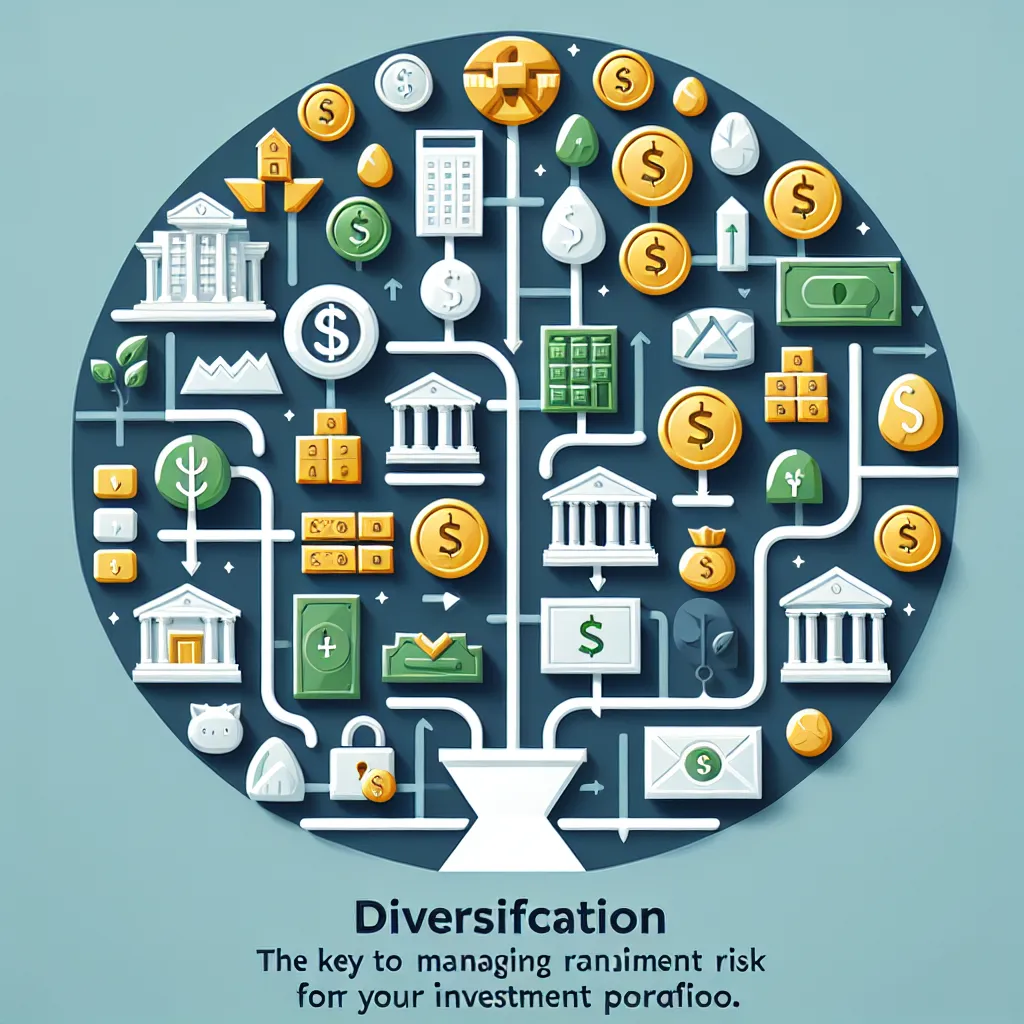
Diversification: The Key to Managing Risk in Your Investment Portfolio
When it comes to investing, one of the most important principles to keep in mind is diversification. By spreading your investments across different assets and markets, you can reduce the overall risk in your portfolio and increase your chances of achieving stable returns. In this article, we will explore the importance of diversification and how it can help you manage risk effectively.
Not only does diversification help protect your investments from market volatility, but it also allows you to take advantage of various opportunities in different sectors. By investing in a mix of assets, you are less likely to be affected by a downturn in any single market. This strategy can help cushion your portfolio from unexpected events and provide a more stable return over time.
If you are new to investing, it can be tempting to put all your money into one asset class or market that is performing well at the moment. However, this approach can be risky as it leaves you vulnerable to market fluctuations. Instead, consider spreading your investments across a diverse range of assets, such as stocks, bonds, real estate, and commodities.
All things considered, the key to successful investing is to create a well-diversified portfolio that aligns with your risk tolerance and investment goals. By investing in different assets that have low correlation with each other, you can reduce the overall risk in your portfolio and increase the chances of achieving stable returns over time.
Although that may be true, it is essential to regularly review and rebalance your portfolio to ensure that it remains diversified. Market conditions can change quickly, and assets that were performing well in the past may not continue to do so in the future. By regularly monitoring your investments and making adjustments as needed, you can maintain a well-diversified portfolio that is resilient to market fluctuations.
Investing in a mix of assets not only helps reduce risk, but it also allows you to capture the upside potential of different markets. For example, if one asset class is underperforming, another may be outperforming, balancing out the overall return of your portfolio. By diversifying your investments, you can potentially maximize returns while minimizing risk.
Be that as it may, it is important to understand that diversification does not guarantee profits or protect against losses. Every investment comes with a certain level of risk, and diversification is just one tool to help manage that risk effectively. It is equally important to conduct thorough research, seek professional advice, and stay informed about market developments.
In conclusion, diversification is a fundamental strategy for managing risk in your investment portfolio. By spreading your investments across different assets and markets, you can reduce the overall risk and increase your chances of achieving stable returns over time. As I observed, maintaining a well-diversified portfolio requires regular monitoring and adjustments to ensure that it remains aligned with your investment goals.
InvestingBlog – Finance Education for Individuals and Companies
Sources:
https://www.investopedia.com/terms/d/diversification.asp
Description: This article discusses the importance of diversification in managing risk in investment portfolios.
Tags: investment, diversification, risk management, portfolio management.
Focus phrase: Managing Risk in Investment Portfolio
