
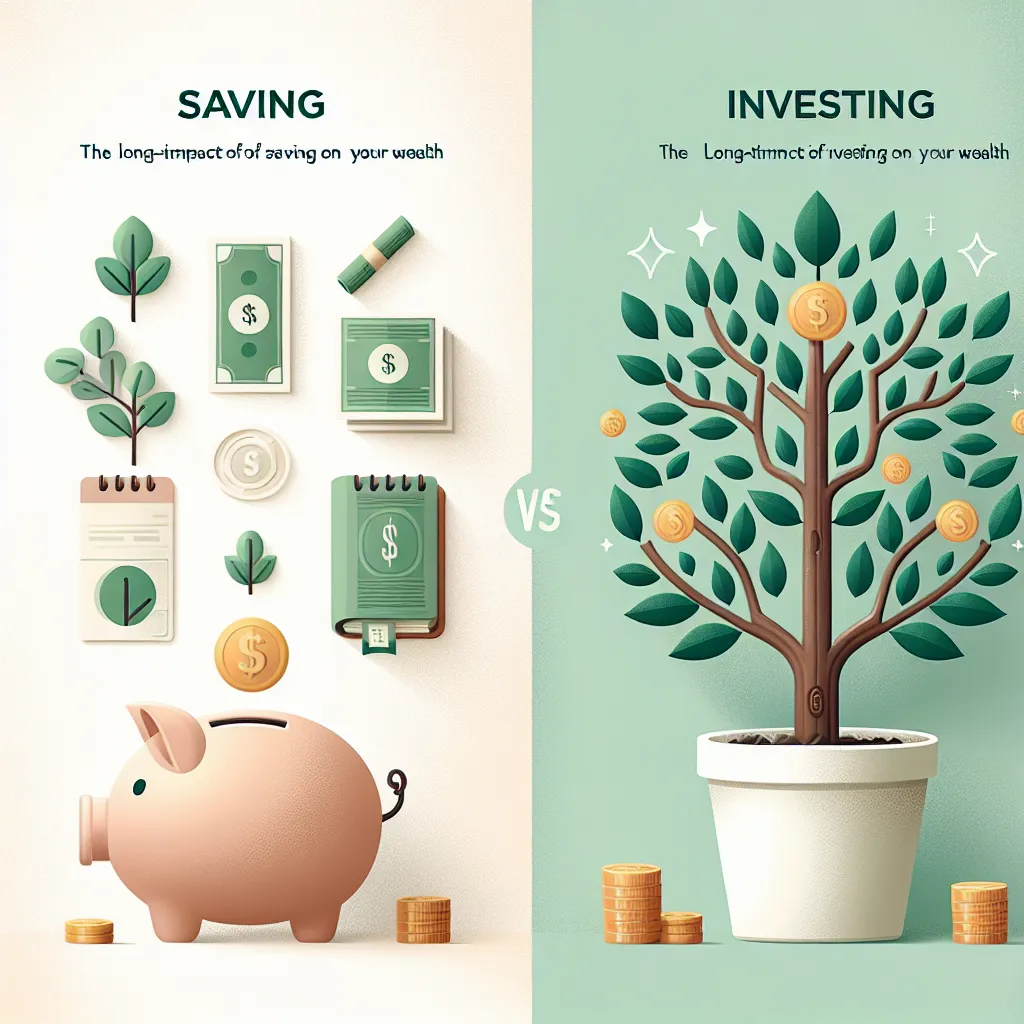
The Long-Term Impact of Saving vs. Investing on Your Wealth
When it comes to securing your financial future, the decision between saving and investing is crucial. Both strategies have their own merits, but understanding the long-term impact of each can help you make informed decisions that will benefit you in the years to come.
Saving money is a fundamental financial practice that many people adopt as a first step towards building wealth. By setting aside a portion of your income regularly, you can build up a safety net for unexpected expenses and emergencies. However, simply saving money may not be enough to achieve your long-term financial goals.
Investing, on the other hand, involves putting your money into assets with the expectation of generating a return. This can include stocks, bonds, real estate, or other financial instruments. While investing carries more risk than saving, it also offers the potential for higher returns over time.
The key difference between saving and investing lies in the potential for growth. When you save money in a traditional savings account, the interest rate may not be enough to keep pace with inflation. Over time, the purchasing power of your savings may decrease, leading to a loss of wealth in real terms.
On the other hand, investing in assets that have the potential to grow in value can help you outpace inflation and build wealth over the long term. By diversifying your investment portfolio and staying invested for the long haul, you can take advantage of compounding returns and maximize your wealth-building potential.
Not only can investing help you build wealth over time, but it can also provide you with additional income streams in the form of dividends, interest, or rental income. This can help you achieve financial independence and reach your financial goals faster than saving alone.
However, it’s important to understand that investing comes with risks. The value of investments can fluctuate with market conditions, and there is always the possibility of losing money. That’s why it’s crucial to do your research, seek professional advice, and diversify your investments to mitigate risk.
Ultimately, the decision between saving and investing will depend on your financial goals, risk tolerance, and time horizon. A combination of both strategies may be the ideal approach for many investors, allowing them to balance risk and reward while working towards their long-term financial objectives.
In conclusion, the long-term impact of saving vs. investing on your wealth can be significant. While saving money is important for financial security, investing offers the potential for growth and wealth accumulation over time. By understanding the differences between the two approaches and taking a balanced approach, you can set yourself on the path to financial success.
InvestsBlog – Finance Education for Individuals and Companies
Sources:
https://www.investopedia.com/articles/investing/051513/saving-versus-investing.asp
Description: This article explores the long-term impact of saving vs. investing on your wealth and provides insights into making informed financial decisions. Tags: saving, investing, wealth, financial goals. Focus phrase: saving vs. investing.
