
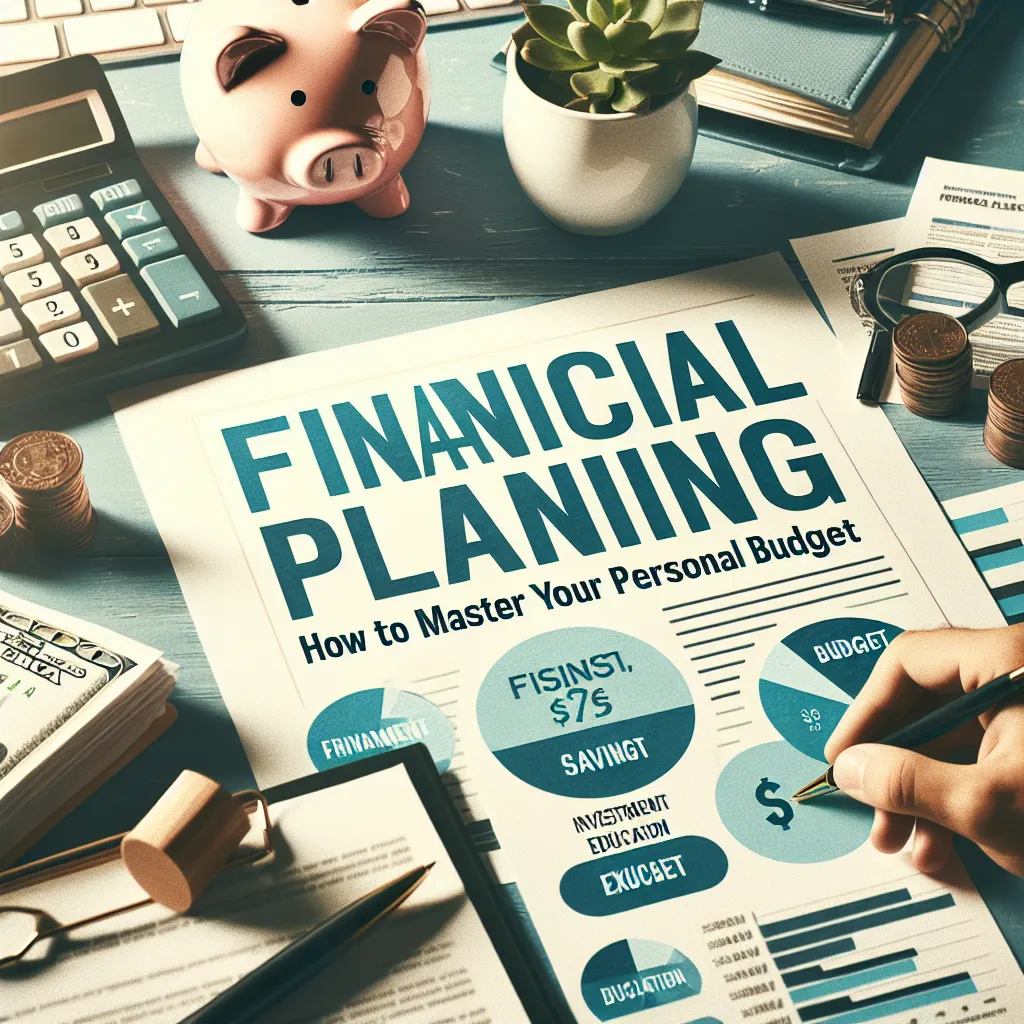
Financial Planning: How to Master Your Personal Budget
Do you find yourself overwhelmed by your finances? Are you struggling to keep track of where your money is going each month? It might be time to master your personal budget. Taking control of your financial situation and implementing a solid financial plan can help alleviate stress and work towards achieving your financial goals.
At InvestsBlog, we prioritize financial education and provide helpful guides and tutorials to individuals and companies. In this article, we will focus on mastering your personal budget using the Pareto Principle to highlight the most relevant tips and strategies.
Setting a Budget: The Foundation of Financial Planning
Setting a budget is the first step in mastering your personal finances. It helps you track your expenses and prioritize your spending and savings goals. Calculate your income and list all your monthly expenses, including fixed expenses like rent and utilities, and variable expenses like groceries and entertainment.
Creating a budget can be challenging, but there are online tools and apps available to simplify the process. Websites like Mint and YNAB offer budgeting templates and tools to help you track your spending and stay on target.
Track and regularly review your expenses to make adjustments as needed. Life changes can impact your financial situation, so staying flexible is crucial.
Building an Emergency Fund: Financial Security for the Unexpected
An emergency fund is essential for any financial plan. It provides a safety net for unexpected expenses and peace of mind knowing you have a cushion to fall back on. Financial experts recommend saving at least three to six months’ worth of living expenses in an emergency fund.
Start by setting aside a portion of each paycheck until you reach your savings goal. Consider opening a high-yield savings account to earn interest and keep your emergency fund accessible.
Investing for the Future: Growing Your Wealth
Once you have a budget and emergency fund, consider investing for the future. Investing is a powerful tool for growing your wealth and achieving long-term financial goals. Diversify your portfolio by investing in stocks, bonds, mutual funds, or real estate to minimize risk.
If you’re new to investing, consult with a financial advisor or use a robo-advisor to create a personalized investment strategy. Start small and increase your investments gradually as you become more comfortable with the process.
In conclusion, mastering your personal budget is crucial for financial success and security. By setting a budget, building an emergency fund, and investing for the future, you can take control of your finances and work towards your long-term financial goals. Review and adjust your budget regularly and seek advice from financial professionals if needed.
InvestsBlog Signature:
Written by InvestsBlog
Twitter: https://twitter.com/investsblog
Content Sources:
Source link: [insert link here]
Description: This article provides tips and strategies for mastering your personal budget, setting a solid foundation for financial planning and success.
Tags:
Financial Planning, Budgeting, Personal Finance, Investing
Focus Phrase: Financial Planning: How to Master Your Personal Budget
