
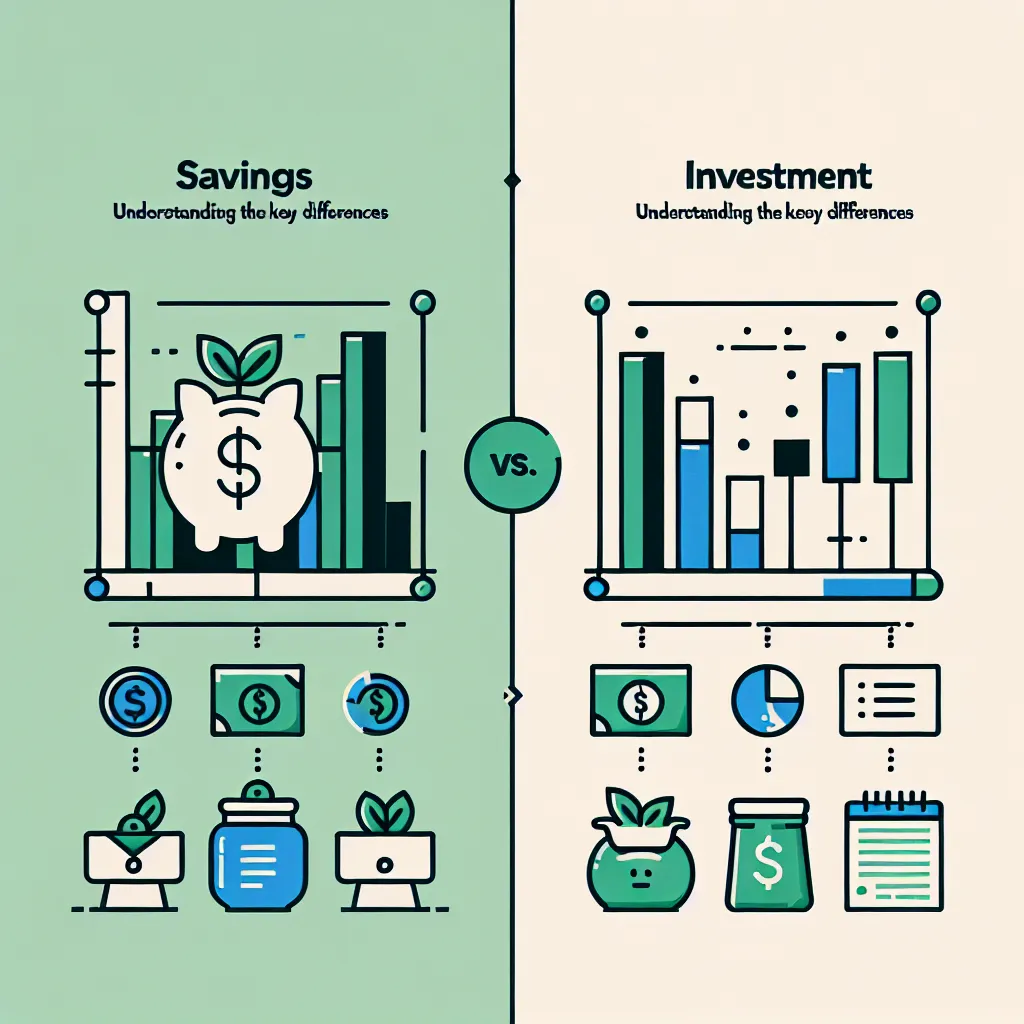
Savings vs. Investment: Understanding the Key Differences
When it comes to managing your finances, understanding the difference between saving and investing is crucial. Not only can the two terms often be used interchangeably, but they also serve unique purposes in helping you achieve your financial goals. In this article, we will explore the key differences between savings and investments to help you make informed decisions about your money.
What is Savings?
Savings refer to the money you set aside for future use, typically in low-risk accounts such as savings accounts or certificates of deposit (CDs). The main purpose of saving is to have a financial cushion for emergencies or to reach short-term goals like buying a car or going on a vacation. Savings are usually easily accessible and liquid, making them a secure option for storing your money.
On the other hand, Investments involve putting your money into assets such as stocks, bonds, real estate, or mutual funds with the expectation of generating a return. Unlike savings, investments carry an element of risk, but they also offer the potential for higher returns over the long term. Investing is a way to grow your wealth and achieve financial goals such as retirement planning, buying a home, or funding your children’s education.
It is important to understand that saving and investing are not mutually exclusive. In fact, they complement each other in a well-rounded financial plan. Savings provide a safety net for unexpected expenses, while investments offer growth potential to build wealth over time. By diversifying your financial portfolio with both savings and investments, you can balance security with growth and tailor your strategy to meet your specific needs.
One key difference between saving and investing is the return on investment. Savings typically offer lower returns compared to investments due to their low-risk nature. While savings accounts provide a safe place to store your money, they often earn minimal interest that may not keep pace with inflation. On the other hand, investments have the potential for higher returns, but they also come with greater risk and volatility.
Another difference is the time horizon. Savings are generally used for short-term goals and emergencies, so the funds are easily accessible when needed. Investments, on the other hand, are typically long-term commitments that require patience and a long-term perspective. By investing for the long term, you give your money more time to grow and benefit from compounding returns.
In conclusion, savings and investments play distinct roles in helping you achieve your financial goals. While savings provide security and liquidity, investments offer growth potential and the opportunity to build wealth over time. By understanding the key differences between saving and investing, you can create a balanced financial plan that maximizes the benefits of both. Remember, it’s not about choosing between saving or investing but finding the right balance to meet your financial needs and goals.
As I observed, managing your finances effectively requires a thoughtful approach to saving and investing. By diversifying your financial portfolio and understanding the unique benefits of both savings and investments, you can create a solid foundation for your financial future.
investsblog
Certified Financial Advisor
Click here to follow us on Twitter: https://twitter.com/investsblog
Content sources: Investopedia, The Balance
Description: This article explores the key differences between savings and investments, emphasizing the importance of balancing security and growth in financial planning.
Tags: savings, investments, finance, financial planning
Focus phrase: savings vs. investment
