
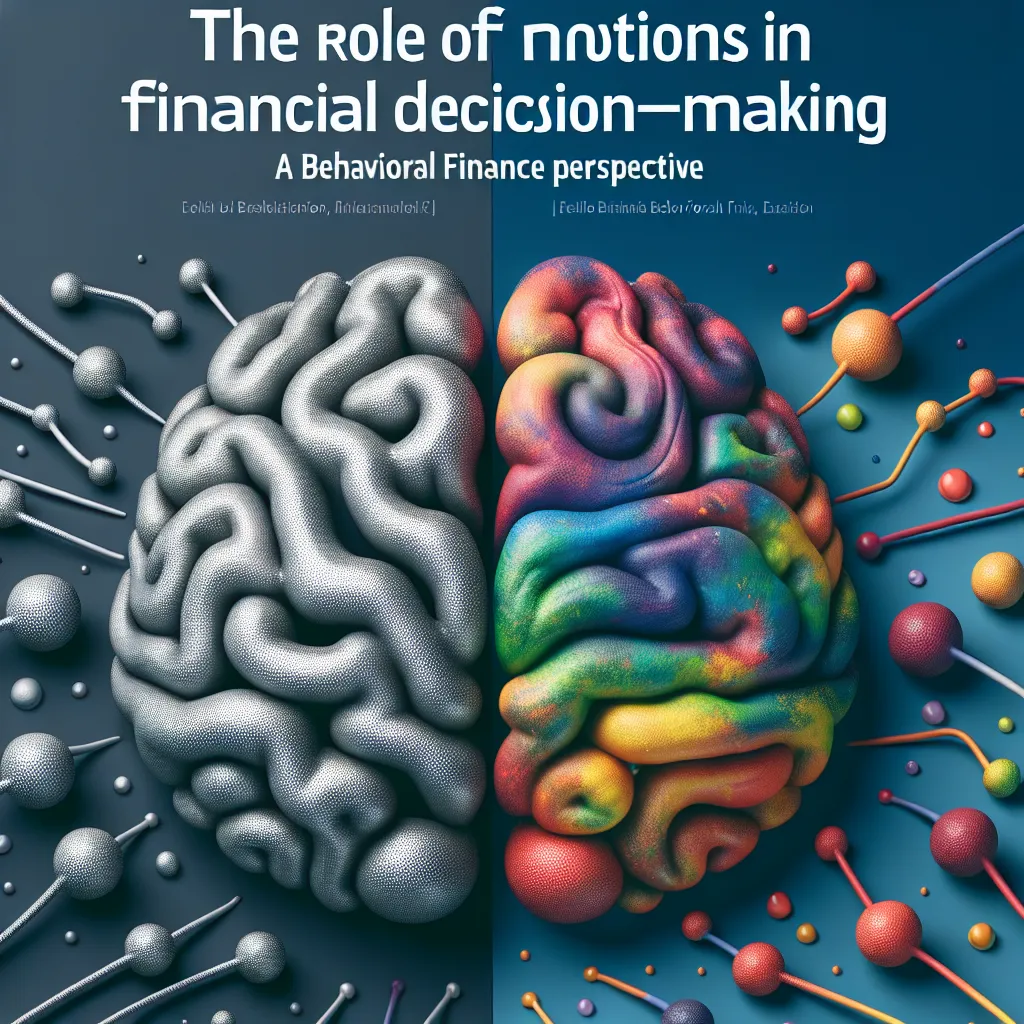
The Role of Emotions in Financial Decision-Making: A Behavioral Finance Perspective
In the world of finance, decision-making is a key component of success. Oftentimes, individuals and companies alike find themselves at a crossroads, faced with important choices that can impact their financial well-being. But what role do emotions play in these decisions, and how can they influence the outcome? This article dives into the realm of behavioral finance to explore the impact of emotions on financial decision-making.
The Influence of Emotions
Emotions are a fundamental aspect of human behavior that can greatly impact the decision-making process. When it comes to financial decisions, emotions such as fear, greed, and excitement can cloud judgment and lead individuals to make irrational choices. In fact, studies have shown that emotions often play a significant role in financial decision-making, sometimes even more so than traditional economic theory would suggest.
Understanding Behavioral Finance
Behavioral finance is a field of study that combines psychology and economics to understand how individuals make financial decisions. It recognizes that people do not always act rationally when it comes to money and that emotions can heavily influence decision-making. By studying the psychological factors that drive financial behavior, researchers in this field seek to improve the understanding of why people make certain choices when it comes to finances.
The Impact of Emotions on Investment Decisions
When it comes to investing, emotions can have a profound impact on decision-making. For example, fear of losing money can cause investors to sell their investments prematurely, missing out on potential gains in the long run. On the other hand, greed can lead individuals to take on excessive risk in pursuit of higher returns, potentially putting their financial future at risk.
Overcoming Emotional Biases
To make sound financial decisions, it is essential to recognize and overcome emotional biases. This may involve taking a step back and evaluating the situation objectively, rather than letting emotions dictate the decision-making process. By being aware of common biases such as loss aversion and overconfidence, individuals can make more informed choices when it comes to their finances.
Conclusion
In conclusion, the role of emotions in financial decision-making cannot be understated. By understanding how emotions can influence our choices, we can take steps to mitigate their impact and make more rational decisions when it comes to finances. Behavioral finance offers valuable insights into the psychology behind financial behavior and provides strategies for overcoming emotional biases. Ultimately, by being aware of the role emotions play in financial decision-making, individuals and companies can make more informed choices that lead to greater financial success.
InvestsBlog
Finance Education for Individuals and Companies
Sources:
Tags: finance, decision-making, emotions, behavioral finance
Focus Phrase: financial decision-making emotions behavioral finance
